
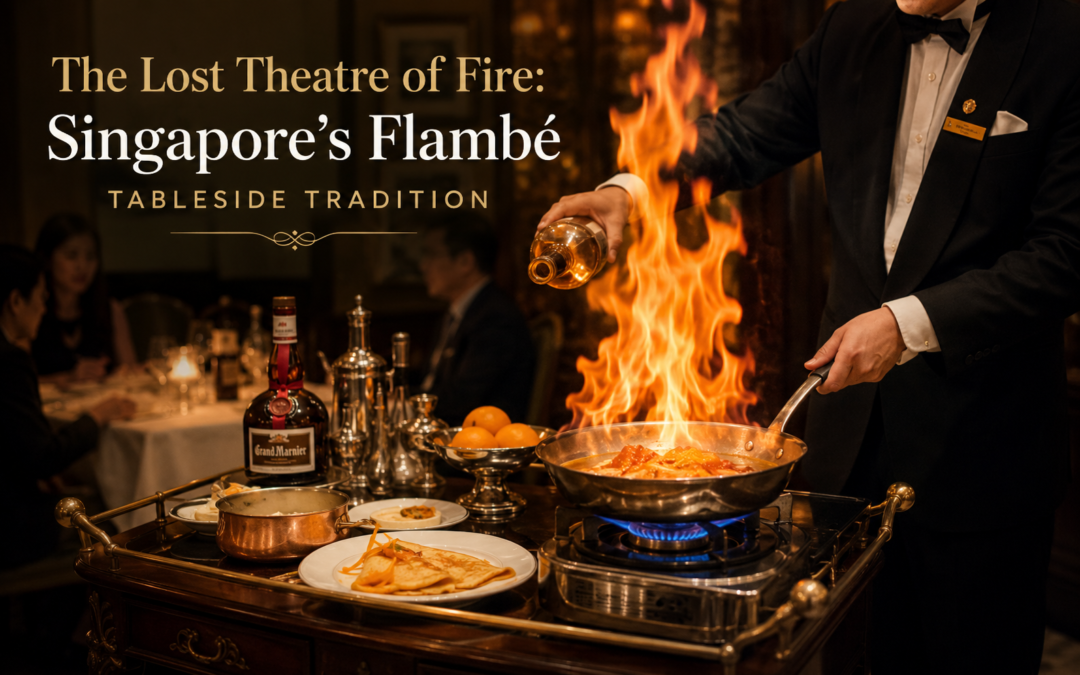
The Lost Theatre of Fire: Singapore’s Flambé Tableside Tradition
Before open kitchens and social media food videos became the norm, Singapore diners once found entertainment directly beside their tables. In the golden decades of fine dining from the 1960s through the 1980s, flambé tableside service represented sophistication, romance, and culinary theatre.
The dimming of dining room lights.
The rolling of a gleaming gueridon trolley.
The scent of butter, citrus, and spirits filling the air.
Then suddenly — fire.
For many Singaporeans, these moments remain deeply nostalgic reminders of celebratory dinners, family milestones, and old-world hospitality.
A Tradition Rooted in European Dining
Flambé cooking originated from classic French and continental European dining traditions, where dishes were finished tableside using spirits such as cognac, rum, or orange liqueurs. The ignition of alcohol created both spectacle and flavor, caramelising sauces while releasing rich aromas.
As Singapore developed into a cosmopolitan city in the post-war decades, European dining customs found a home in the country’s grand hotels and heritage restaurants. Continental cuisine became associated with elegance and status, and flambé service soon became a hallmark of refined dining experiences.
Restaurants serving Russo-Hainanese and Hainanese Western cuisine played a particularly important role in preserving this ritual. Hainanese chefs, renowned for adapting European techniques to local tastes, mastered the precision and discipline required for tableside preparation.
Dinner as Performance
Unlike modern fast-paced dining, flambé service slowed the evening down. Diners watched as captains and senior waiters prepared dishes with deliberate care only inches away from the table.
There was choreography to it:
- Folding crepes with precision
- Heating copper pans over portable burners
- Pouring measured amounts of liqueur
- Igniting flames at exactly the right moment
The experience transformed dining into theatre.
Children stared in amazement. Couples leaned closer across candlelit tables. Conversations paused briefly as blue and amber flames danced through the air.
In many ways, flambé service symbolised a period when restaurants focused not merely on feeding guests, but on creating memories.
The Legendary Crepe Suzette
Among the most iconic flambé desserts was Crepe Suzette — delicate French crepes served with a buttery orange sauce, flambéed with orange liqueur and cognac.
For generations of Singapore diners, the dish became synonymous with special occasions and old-school continental dining.
The preparation itself was part of the allure:
fresh orange zest, caramelising sugar, butter melting into sauce, and finally the dramatic burst of flames as Grand Marnier or Cointreau met the pan.
The result was not merely sweetness, but layers of citrus complexity, warmth, and aroma impossible to recreate through shortcuts.
Why the Tradition Declined
By the late 1990s and early 2000s, flambé tableside dining began disappearing across Singapore.
Several factors contributed to its decline:
- Rising manpower costs
- Faster dining turnover expectations
- Open kitchen concepts replacing tableside service
- Reduced training in classical dining techniques
- Modern safety and operational constraints
Flambé service requires experienced staff, confidence under pressure, and time — luxuries increasingly difficult to sustain in today’s restaurant environment.
What once represented the pinnacle of hospitality slowly became rare.
Preserving a Piece of Singapore’s Dining Heritage
Yet despite changing times, a handful of heritage restaurants continue to preserve flambé traditions today.
These establishments do more than serve food; they keep alive a style of hospitality rooted in craftsmanship, attentiveness, and human interaction. Diners are reminded that restaurants were once places where elegance unfolded slowly and meals became occasions to remember.
For younger Singaporeans who have never experienced flambé tableside dining, the ritual offers something increasingly uncommon in modern life: anticipation, wonder, and genuine theatre without screens.
The sight of flames rising beside the dining table still possesses the power to stop conversations and create childlike amazement.
And perhaps that is why the tradition continues to endure.
Because beyond the fire itself lies something deeper — the warmth of memory, celebration, and a Singapore dining culture that understood the beauty of making guests feel truly special.